
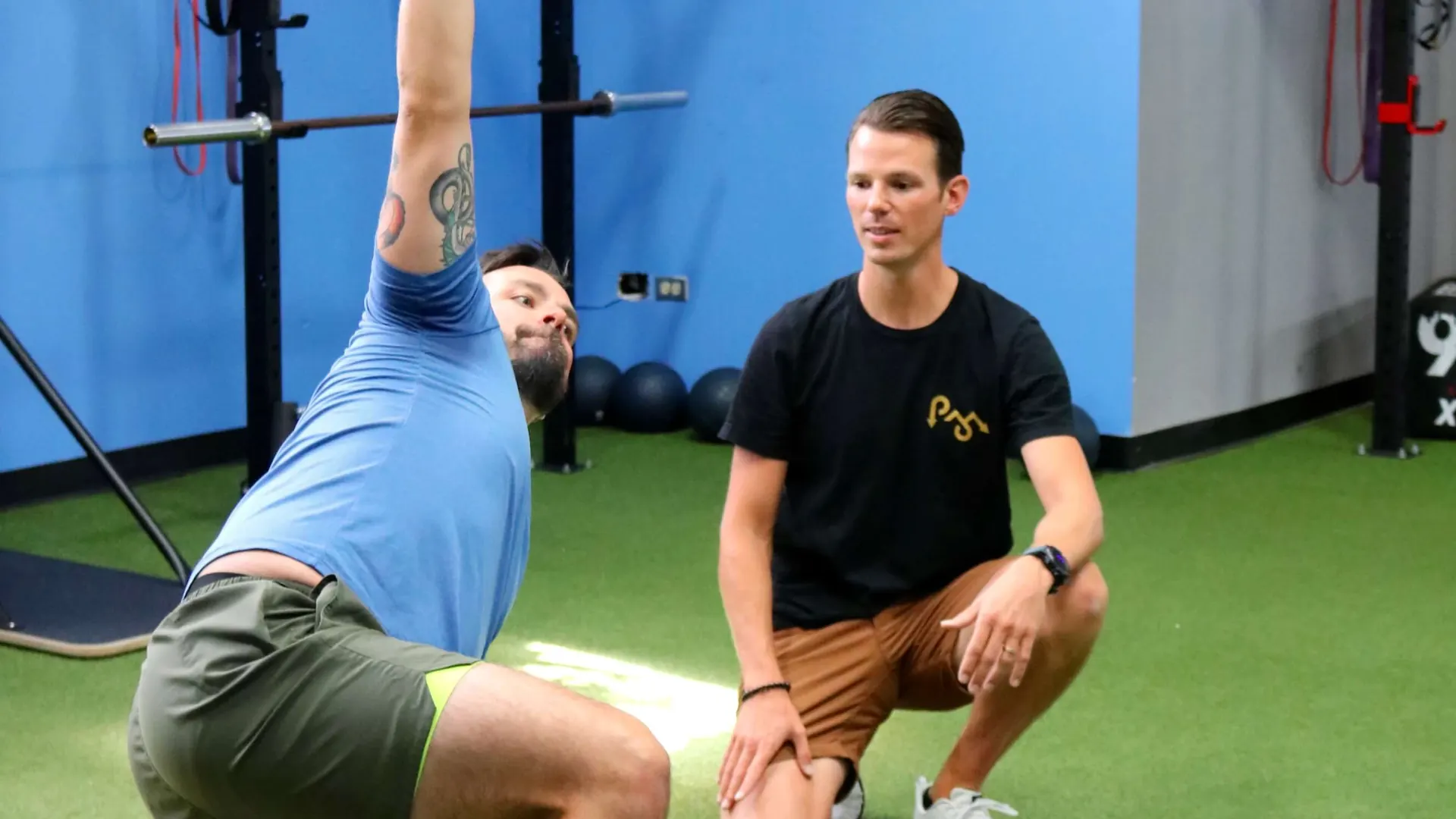
Shoulder pain is almost never just "the shoulder."
The shoulder complex depends on contributions from the neck, thoracic spine, and scapular muscles to function pain-free. When any of these contributing regions are dysfunctional, whether restricted mobility, weak stabilizers, or altered movement timing, the shoulder compensates until it cannot.
Diagnosing the structural source of shoulder pain is necessary. But treating only the shoulder without addressing the system that supports it is why shoulder symptoms recur after initial treatment. We assess the whole kinetic chain.
Pain that tells us which structure is involved.
When your pain occurs, what movements provoke it, and where it refers tells us a great deal before the first hands-on assessment.
Painful Arc
Pain between 60 and 120 degrees of arm elevation during presses and overhead reaches, classic for rotator cuff or bursal involvement.
Overhead Weakness
Difficulty pressing or holding weight overhead, or losing power in your throw, serve, or stroke.
Night Pain
Waking up with shoulder pain, especially after a day of pressing, throwing, swimming, or swinging a club.
Reaching Behind
Pain or restriction reaching behind you: the back-squat bar position, the finish of your golf swing, or a swim stroke recovery.
Clicking or Catching
Audible or palpable clicking during presses, pull-ups, or throwing, particularly with rotation.
Loss of Full Range
Losing the range to get into a full overhead position, finish your swing, or rotate pain-free in every direction.
We evaluate the whole body.
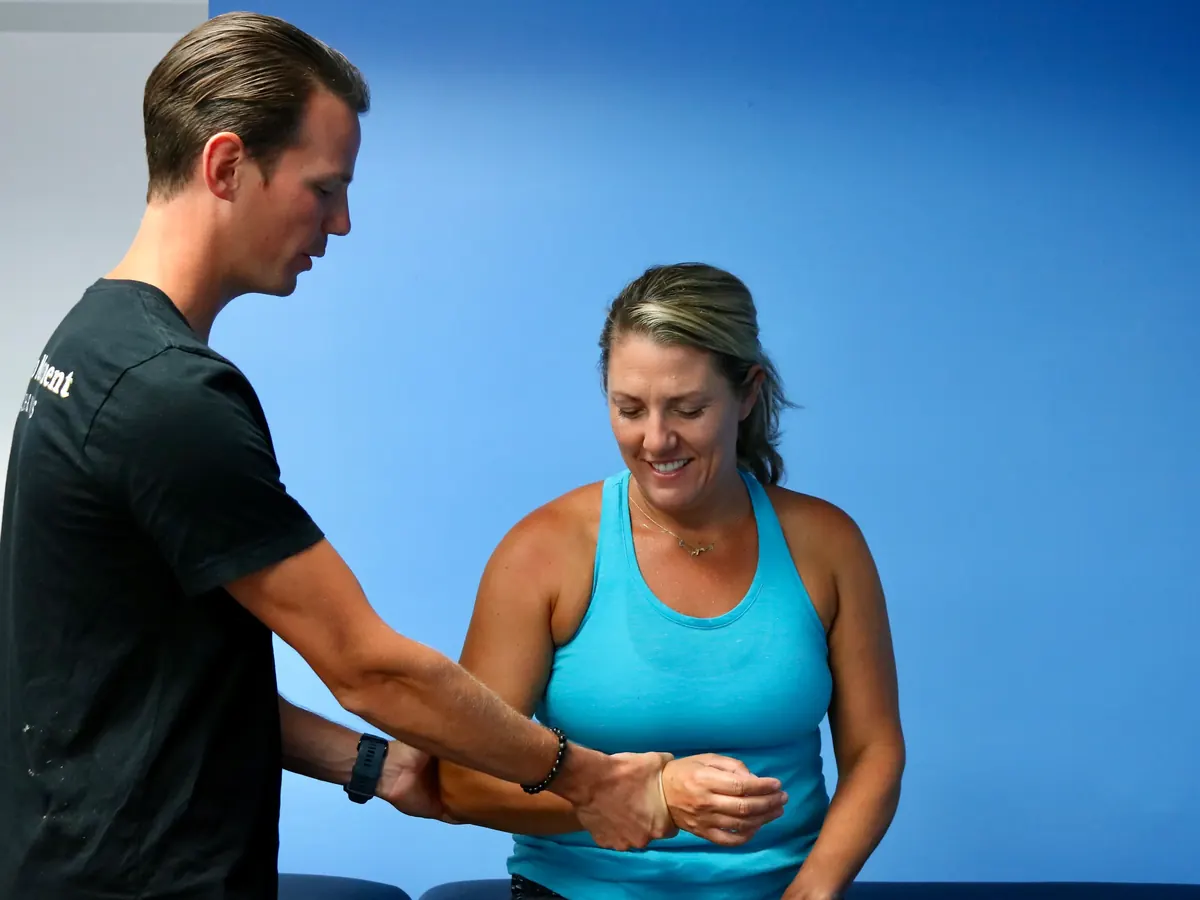
Shoulder rehabilitation at Path to Movement begins with a comprehensive assessment of the shoulder complex, cervical spine, and thoracic mobility. Each structure is examined for its contribution before a treatment plan is formed.
Manual therapy restores restricted joint mechanics. Rotator cuff and scapular stabilization exercises rebuild the muscular support system. Soft tissue work addresses compensatory muscle tension. The result is a shoulder that moves well and does not come back.
How we approach your care.
Your shoulder problem isn’t just a shoulder. Your knee pain isn’t just a knee. Movement is integrated and your care should be too.Path to Movement · Our Philosophy
Book Your Performance Evaluation
Book your Performance Evaluation today and take the first step toward building a body you can trust. You get one-on-one care with a licensed physical therapist.
You’re all set.
We’ll reach out within one business day to confirm your appointment. If you need to speak with us sooner, call us directly.